What are Solids of Rotation?
Definition:
A solid of rotation (or solid of revolution) is a three-dimensional object formed by rotating a two-dimensional shape around an axis that lies in the same plane.
Solids of rotation are an important concept in geometry and calculus. They help us understand how to create and calculate the properties of many common 3D objects like spheres, cylinders, and cones.
Real-World Visualization
You can visualize solids of rotation by imagining a potter's wheel. When a potter places a curved tool against a spinning lump of clay, the resulting 3D shape is a solid of rotation. Similarly, many everyday objects like vases, wine glasses, and lampshades are solids of rotation.
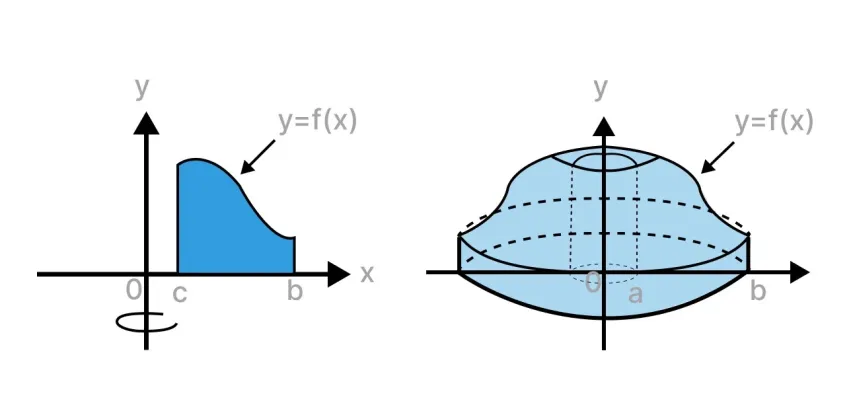
When a 2D shape rotates around an axis, every point in the shape traces out a circular path. These circular paths collectively form the 3D solid.
Common Solids of Rotation
1. Cylinder
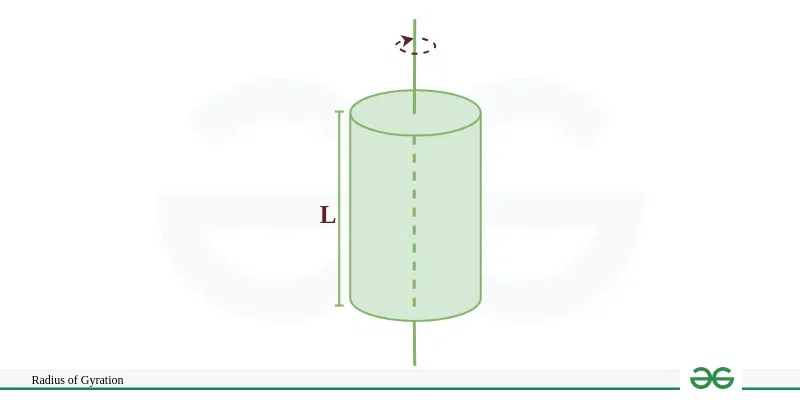
A cylinder is formed by rotating a rectangle around an axis that coincides with one of its sides.
Volume of a cylinder:
where r is the radius and h is the height
2. Cone
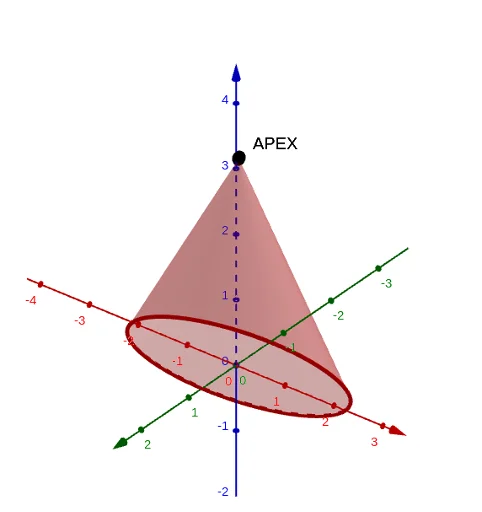
A cone is formed by rotating a right triangle around an axis that coincides with one of its legs.
Volume of a cone:
where r is the radius of the base and h is the height
3. Sphere
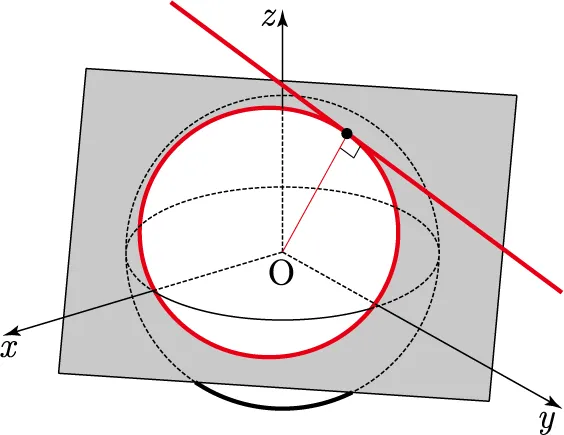
A sphere is formed by rotating a semicircle around its diameter.
Volume of a sphere:
where r is the radius of the sphere
4. Torus (Ring)
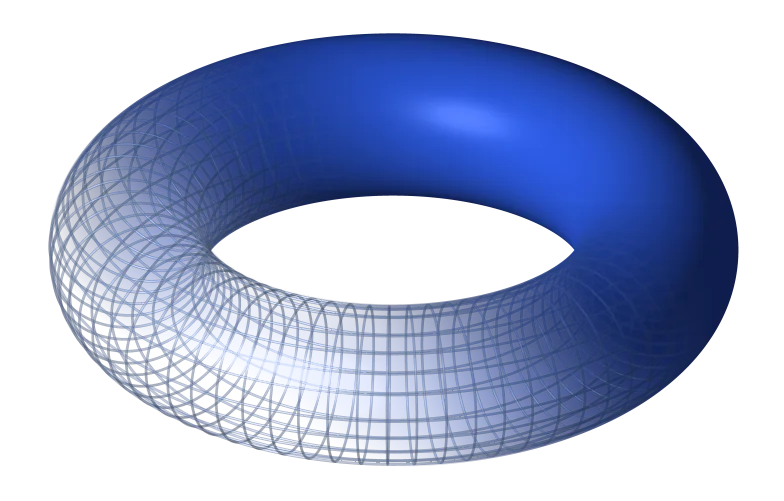
A torus (donut shape) is formed by rotating a circle around an axis that does not intersect the circle.
Volume of a torus:
where R is the distance from the center of the tube to the center of the torus and r is the radius of the tube
Important Principles
Key Concepts:
- If the 2D shape touches the axis of rotation, the resulting 3D solid will be connected at that point.
- If the 2D shape does not touch the axis of rotation, the resulting 3D solid will have a hole through it (like a torus).
- The volume of a solid of rotation can be calculated using integral calculus (using the disk or shell method).
- In calculus, we often use the disk method when rotating around the x-axis and the shell method when rotating around the y-axis.
Applications in Calculus
In calculus, finding the volume of solids of rotation becomes more complex when dealing with curves rather than simple shapes. We use integration methods:
Disk Method
Used when rotating around the x-axis. The volume is:
where f(x) is the function being rotated, from x=a to x=b
Shell Method
Used when rotating around the y-axis. The volume is:
where f(x) is the function being rotated, from x=a to x=b
Note: This page presents an introduction to solids of rotation. For more detailed explanations and practice problems, consider visiting comprehensive mathematics resources or textbooks on calculus and geometry.
Concepts based on standard mathematical principles. Visualization inspired by materials from various educational resources.